
The Modern Farmhouse Hearth: Why a Garden Window?
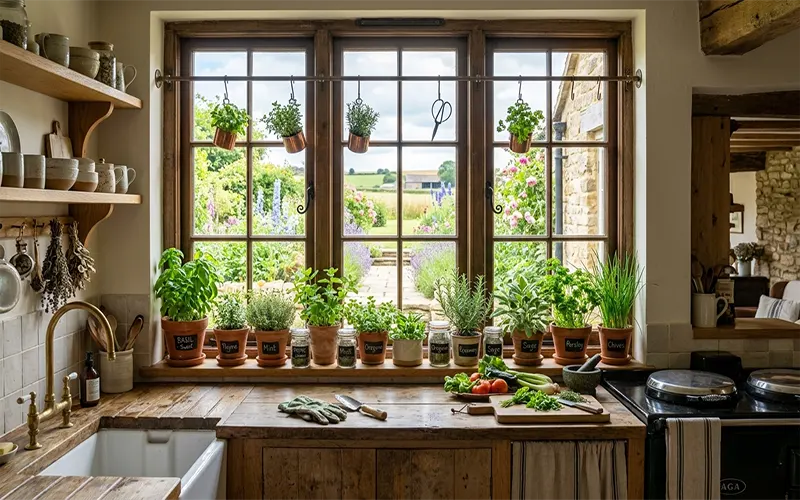
In the heart of the farmhouse kitchen, the “box window” or garden window serves as a beautiful architectural extension that projects beyond the home’s exterior wall. This design choice perfectly captures the modern farmhouse appeal, blending rugged utility with the soft, “living” beauty of a year-round indoor garden. Beyond the aesthetic, the true magic lies in culinary accessibility. There is a unique joy in reaching out while a sauce simmers on the stove to pluck fresh rosemary, thyme, or basil directly from your “living” window. It transforms the kitchen from a place of mere labor into a sensory sanctuary where the garden and the table are only inches apart.
Designing for Growth: Structural Considerations
To turn a window into a thriving herb sanctuary, the structure must be as functional as it is beautiful.
- Maximizing Light: A successful garden window utilizes a three-sided glass design, which is essential for capturing sunlight from multiple angles throughout the day, ensuring your herbs don’t become “leggy” as they reach for the sun.
- Shelving Systems: When choosing shelving, consider the balance between light and air. Glass shelves allow maximum light penetration to the plants below, while wire shelving promotes better air circulation around the foliage, which is vital for preventing fungal issues.
- The Bottom Tray: Because you’ll be watering frequently, a moisture-resistant, insulated base is a necessity to protect your window frame from water runoff and to provide a thermal break from the outside air.
- Ventilation: Heat buildup can be a silent killer in glass boxes during the summer. Operable side vents are crucial for managing humidity and providing the fresh air exchange that herbs need to remain vigorous.
Selecting Your Farmhouse Herbs
Not all herbs are created equal when it comes to life behind glass. To maintain that rustic farmhouse charm, start with the “Essential Six”:
- Basil: The sun-loving king of the kitchen window.
- Parsley: A resilient, deep-green staple.
- Chives: Provides a delicate onion flavor and beautiful vertical texture.
- Mint: Tough and aromatic, though it prefers slightly more moisture and can handle partial shade.
- Thyme: A Mediterranean favorite that loves the heat of the glass.
- Cilantro: Best grown in the cooler corners of your window.
For a cohesive look, group your Mediterranean herbs—like thyme and rosemary—together in the sunniest spots, and keep your moisture-loving mint in the slightly shaded corners. To reinforce the farmhouse theme, pair these greens with vintage-style pots like aged terracotta, weathered zinc buckets, or stoneware ceramic crocks.
Herb Light Requirement Guide
| Herb | Light Needs | Ideal Placement |
| Basil | High / Full Sun | Center Shelf |
| Thyme | High / Full Sun | Near Side Glass |
| Mint | Medium / Partial Sun | Lower or Corner Shelf |
| Parsley | Medium / Partial Sun | Bottom Tray |
The Practicalities of Indoor Cultivation
Growing in a garden window presents a unique “microclimate challenge” because the window essentially sits outside the house’s main insulation. This means your plants may experience more dramatic temperature fluctuations than the rest of your kitchen.
To keep the area clean and dry, use the “Double Potting” method: place your herb in a functional plastic nursery liner with drainage holes, then set that inside your decorative farmhouse crock. This allows you to water thoroughly without the mess. Additionally, keep a watchful eye for common indoor pests like fungus gnats or spider mites; a contained glass environment can occasionally invite these uninvited guests if air circulation is low.
Pro Tip: Winter Growth During dark winter months, even a three-sided window may not provide enough light for sun-hungry herbs like basil. Consider tucking a small, clip-on LED grow light into the top of the window frame to keep your harvest consistent until spring.
Styling the Farmhouse Look
The details are what turn a functional window into a design statement. Match your kitchen’s aesthetic by choosing hardware in matte black, oil-rubbed bronze, or brushed brass for the window vents and handles.
You can also lean into the “curated clutter” of a working kitchen garden. Hang a pair of vintage iron scissors on a small hook for quick harvesting, or use antique-style wooden plant markers to label your varieties. If you need a bit of privacy or light control, a simple cafe curtain or a linen Roman shade can add a soft textile element without completely obscuring your view or blocking the essential sunlight.
From Window to Table A well-designed kitchen garden window offers the simple, profound joy of year-round harvesting, regardless of the weather outside. It is a practical addition that pays dividends in flavor, but more importantly, it transforms a daily cooking task into a beautiful, sensory experience. By bringing the garden into your kitchen, you ensure that the freshest ingredients are always just a heartbeat away.