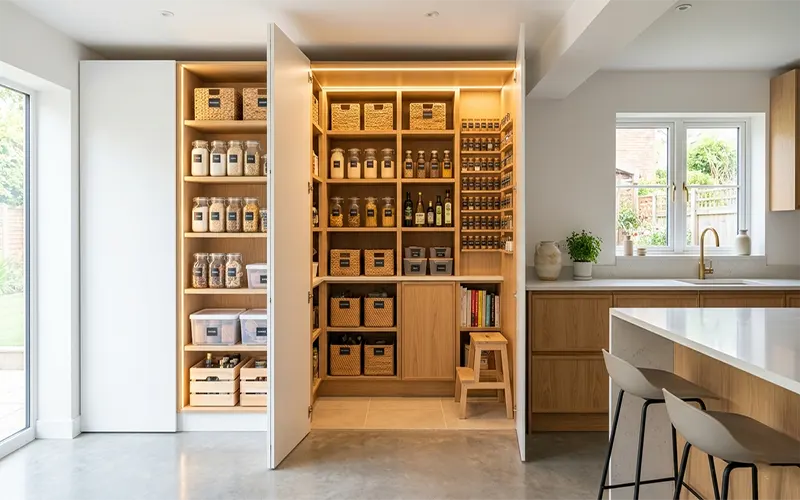
The Silent Kitchen: The Rise of the Hidden Pantry
In contemporary luxury design, we are witnessing a definitive “Clean Countertop” movement. The previous trend of open shelving is being replaced by a preference for concealed, bespoke storage that prioritizes visual calm. Central to this shift is the hidden walk-in pantry—a secret architectural feature often referred to as a modern “butler’s pantry”. These spaces are frequently masked by “jib doors” or cabinetry that matches the surrounding walls perfectly, rendering the entrance nearly invisible to the untrained eye. The psychological benefit of this arrangement is profound; by removing the visual noise of food packaging and small appliances from the main kitchen, we create a serene environment that significantly reduces daily stress. Peace of mind, quite literally, begins behind closed doors.
Architectural Integration: Making it Disappear
The hallmark of a sophisticated kitchen is seamless integration.
- Cabinetry Camouflage: To achieve a true “disappearing” act, we utilize full-height pantry doors that mirror the kitchen’s cabinetry. This creates a seamless wall effect, hiding the expansive storage area behind a facade of elegant woodwork.
- The Pass-Through Concept: Strategic design often involves a dual-entry pantry that connects the garage or mudroom directly to the kitchen. This allows for effortless grocery unloading, moving supplies directly into their designated zones without cluttering the primary living area.
- Lighting and Sensors: A hidden space must feel intuitive. We recommend “auto-on” integrated LED lighting triggered by motion sensors. The moment the door opens, the space is flooded with soft, functional light, ensuring every item is immediately visible.
Zoning for Efficiency: The “Store-by-Task” Method
Ergonomic efficiency is achieved through the “Store-by-Task” method, where items are grouped based on how they are used in your daily life.
- The Morning Station: This zone centralizes coffee pods, artisanal teas, and breakfast grains. It serves as a one-stop destination for your sunrise routine, kept entirely out of sight from the main island.
- The Baker’s Nook: For the serious baker, we design reinforced, counter-height shelving. This allows for the permanent placement of heavy stand mixers and easy access to decanted flours and rolling pins.
- Bulk & Backstock: Vertical space is utilized by assigning the lowest and highest tiers to bulk goods and seasonal appliances, such as turkey roasters or large platters used only for holiday hosting.
- The Snack Zone: To encourage independence, we create a dedicated snack area at a kid-friendly height. This keeps healthy grab-and-go options accessible to younger family members while maintaining a tidy appearance on the upper levels.
The Aesthetics of Order: Containers and Labeling
In a walk-in pantry, uniformity is the key to maintaining an upscale aesthetic.
- Decanting for Visual Calm: By transferring dry goods into identical glass jars or premium BPA-free containers, we eliminate “brand noise”—the clashing colors and fonts of commercial packaging. This creates a high-end, gallery-like feel within the space.
- Sustainable Materials: To add warmth and texture, we incorporate woven seagrass baskets, wooden crates, or wire bins. These are ideal for hiding mismatched packaging or root vegetables while reinforcing the pantry’s bespoke character.
- The Art of Labeling: Minimalist labeling, such as custom vinyl decals or embossed tags, ensures that the system remains easy to navigate without compromising the sophisticated look.
Smart Tech and Ergonomics
The hidden pantry often doubles as an “appliance garage”. By incorporating integrated power outlets, you can keep toasters, blenders, and air fryers plugged in and ready for use behind closed doors, rather than occupying valuable kitchen counter real estate. Ergonomics are further enhanced through the use of high-quality pull-out drawers and “Lazy Susans,” which solve the problem of deep corner accessibility and ensure that no item is ever lost at the back of a shelf.
Pro Tip: Optimizing Depth
Avoid shelves deeper than 12 to 14 inches for standard dry goods. Deep shelves often lead to items being “lost” and eventually expiring; shallower shelving ensures every jar remains within sight and reach.
The Heart of a Functional Home
A hidden walk-in pantry is more than a luxury; it is the engine of a functional, modern home. By prioritizing organization and seamless integration, you create a kitchen that truly works for your lifestyle. True elegance is found in the things you don’t have to see, allowing the beauty of your kitchen’s architecture to shine through undisturbed.
Pantry Inventory Checklist
| Zone | Essential Items | Storage Type |
| Morning Station | Coffee, Tea, Honey, Oats | Glass Canisters |
| Baking Nook | Flour, Sugar, Stand Mixer | Reinforced Counter / Bins |
| Quick Snacks | Nuts, Dried Fruit, Bars | Low-Level Wire Bins |
| Backstock | Paper Goods, Bulk Grains | High-Level Crates |
Quick Tip: The One-In, One-Out Rule
To maintain your clutter-free environment, adopt the “one-in, one-out” rule. Before adding a new specialty ingredient or tool to your pantry, ensure you have used or purged an existing item. This discipline prevents the slow creep of clutter and preserves the visual calm of your bespoke storage space.