
The Urban Frontier: Why Vertical is the Only Way Up
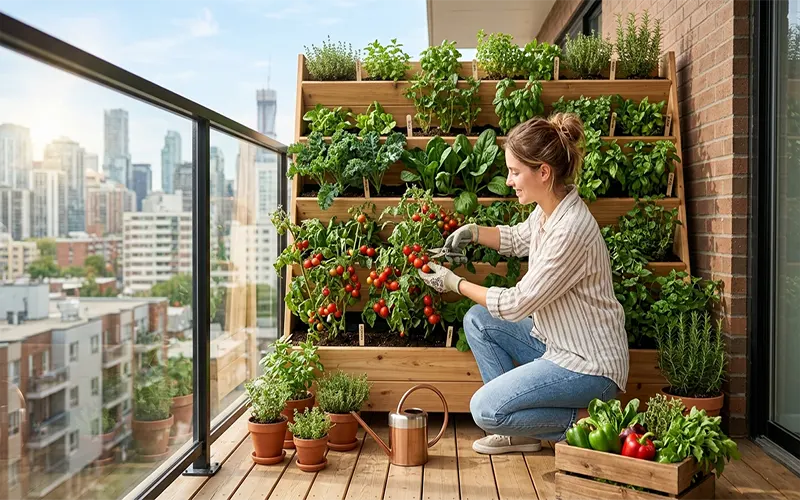
Urban gardening presents a unique set of obstacles: limited sunlight, heat-absorbing concrete surroundings, and practically zero floor space. However, a lack of horizontal square footage shouldn’t stop you from growing your own food. Vertical gardening is the “hacker’s” solution—the strategic use of walls, railings, and trellises to increase growing capacity. By prioritizing vertical efficiency, you can maximize every square inch of your balcony or patio. The “yield-per-foot” advantage is clear: growing up rather than out allows you to maintain a full kitchen garden in a space no larger than a standard bistro set.
Engineering the Vertical Plane: Structure and Support
To succeed in a small-space setup, you need the right infrastructure to support your high-rise harvest:
- The Pocket Wall: Fabric felt wall planters are perfect for breathable, lightweight installations of leafy greens and herbs.
- The Trellis System: Lightweight lattices or A-frames are essential for vining crops, providing the necessary support for plants to climb.
- Tiered Towers: Stackable planters are a major win for gravity-fed irrigation, allowing water to trickle down through multiple levels.
- Railing Planters: Don’t ignore “dead space”. Railing planters allow you to grow shallow-root vegetables on the very edge of your urban territory.
Selecting Your Sky-High Stars: Best Crops for Height
Not every plant is suited for life in the air. Choosing crops with a natural climbing habit or compact growth is key:
- Vining Powerhouses: Pole beans, indeterminate tomatoes, and small-fruited cucumbers are the stars of the vertical world.
- The Cascaders: Strawberries and trailing herbs utilize the “negative space” beneath a pot, spilling over the edges to provide beauty and food.
- Leafy Lifts: Spinach, kale, and microgreens thrive in vertical pockets and respond well to frequent, small harvests.
- The Lightweight Rule: Heavier vegetables like melons or large squashes can be tricky in high-altitude urban settings. If you must grow them, they require specialized support to prevent them from snapping off the vine.
Vertical Crop Compatibility
| Crop Type | Recommended Support | Benefit |
| Indeterminate Tomatoes | Tall Trellis / Cage | Continuous harvest all season |
| Snap Peas | Netting / Lightweight Mesh | Naturally clings and climbs |
| Leafy Greens | Wall Pockets | Excellent drainage and airflow |
| Strawberries | Stackable Towers | Keeps fruit off the concrete |
Care Strategies for Elevated Gardens
Managing an elevated garden requires a shift in your maintenance routine to account for the unique urban micro-climate:
- Hydration Challenges: Vertical gardens dry out significantly faster than traditional beds due to increased wind exposure. Utilizing self-watering reservoirs can help maintain consistent moisture levels.
- Nutrient Density: Because containerized plants are watered frequently, nutrients tend to leach out of the soil quickly. Regularly supplementing with “liquid gold”—a high-quality organic liquid fertilizer—is essential for sustained growth.
- Light Management: In an urban canyon, light can be uneven. Periodically rotating towers or planters ensures that all “floors” of your garden receive adequate UV exposure.
- Wind Protection: High-rise balconies can become wind tunnels. Secure your structures firmly and consider using mesh netting to protect delicate stems from being snapped by sudden gusts.
Pest and Disease Management in Tight Quarters
One of the greatest perks of growing up is improved aeration and airflow. Keeping plants off the ground naturally reduces the risk of powdery mildew and other fungal issues. Furthermore, height acts as a physical barrier against ground-dwelling pests like slugs or rabbits. While aphids and other flying insects can still find their way to your balcony, the overall pest pressure is often much lower than in a traditional garden plot.
Pro Tip: Support Slings
If you’re feeling ambitious and decide to grow larger climbing vegetables, use “slings” made from old t-shirts or pantyhose to cradle the weight of the fruit. Simply tie the sling to your trellis to take the strain off the plant’s stem.
The Skyline Garden
In the city, a small space doesn’t have to mean a small harvest. By embracing vertical gardening, you turn every wall and railing into a productive landscape. Your urban wall isn’t just a boundary—it’s the foundation for your next grocery aisle.
Urban Wind Safety Sidebar
- Always use heavy-duty zip ties or brackets to secure trellises to balcony railings.
- Avoid top-heavy pots that can tip over in high winds.
- If a storm is forecasted, temporarily move lightweight hanging baskets to the floor.