The Threshold of the Green Thumb: Defining the Modern Breezeway
For the dedicated gardener, the home’s entrance is more than just a doorway; it is a critical transition zone between the vibrant, often messy reality of the “wild” garden and the refined, serene interior of the home. The modern breezeway should be viewed as a functional conduit that facilitates this move. Embracing an “Active Mudroom” philosophy means creating a space specifically designed for the containment of elements—handling soil, water, and tools effectively before they ever cross into the main living areas. Beyond the practical utility, there is a profound psychological benefit to this architectural choice. A dedicated transition space allows a gardener to physically and mentally “leave the work behind,” shedding the day’s grime and entering the residence in a state of calm and cleanliness.
Hard-Wearing Foundations: Materials That Handle the Elements
To achieve “durable sophistication,” one must start with a foundation that can withstand moisture, dirt, and heavy use.
- The Floor Profile: Selecting the right surface is paramount for safety and maintenance. Prioritize slip-resistant, non-porous materials such as slip-resistant porcelain tile, natural slate, or polished concrete. These surfaces are robust enough to be hosed down or swept clean without absorbing stains or odors.
- Drainage Systems: High-functioning mudrooms often include discreet floor drains. These are invaluable for washing off muddy boots directly or rinsing harvested root vegetables, allowing the water to exit the space instantly.
- Wall Treatments: Walls in this zone face constant exposure to dampness and splashes. Utilizing beadboard, shiplap, or high-gloss paint finishes provides a moisture-resistant barrier that allows for effortless wipe-downs after a busy afternoon in the soil.
Bespoke Storage for the Seasonal Cycle
Effective mudroom workflow depends on bespoke cabinetry and storage solutions tailored to the gardener’s unique needs.
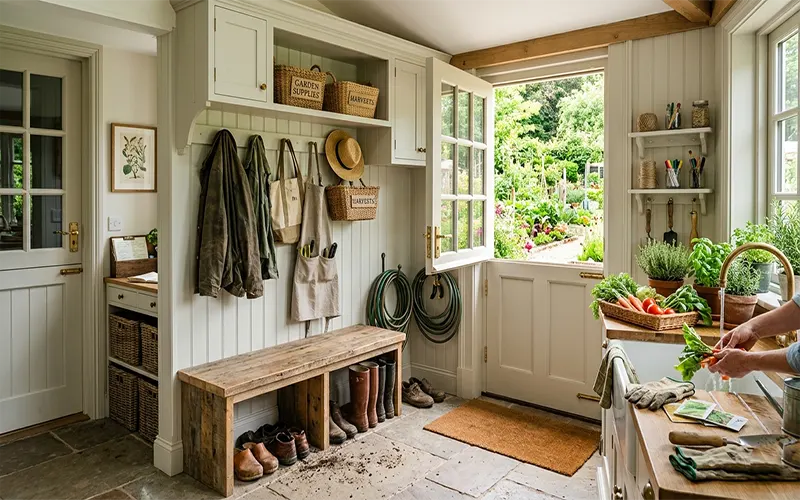
- The Boot Gallery: Proper footwear storage is essential. Incorporate open-slat shelving to encourage maximum airflow, which helps dry damp boots and prevent mildew. Adding an integrated boot jack allows for the hands-free removal of stubborn, muddy wellies.
- Tool Command Center: Keep your most-used items accessible with a centralized hub. Pegboards or custom cabinetry can house hand tools, gloves, and pruning shears at eye level, ensuring everything has a dedicated place.
- The Harvest Station: To keep the kitchen clean, include a harvest sink—ideally a deep “farmhouse” style sink made of stainless steel or stone. This allows for the immediate cleaning of garden produce as soon as it enters the home.
- Utility Lockers: Organization is a family affair. Individual cubbies or lockers for heavy coats, sun hats, and protection ensure that everyone has a designated spot for their outdoor gear, preventing pile-ups by the door.
Mudroom Zones Checklist
| Zone | Primary Feature | Essential Element |
| Sanitization | Harvest Sink | Farmhouse-style basin |
| Storage | Utility Lockers | Individual cubbies |
| Maintenance | Tool Command Center | Eye-level pegboard |
| Flooring | Drainage | Discreet floor drains |
Lighting and Ventilation: The “Fresh” Transition
A well-designed transition space must feel airy and bright to be truly functional.
- Natural Airflow: Proper cross-ventilation is the secret to a fresh-smelling mudroom. Strategic window or vent placement helps whisk away the heavy scents of damp earth and garden fertilizers before they permeate the rest of the house.
- Task Lighting: Precision requires visibility. Bright, overhead LED lighting is necessary for early morning prep or late-evening cleanup. For added safety during midnight checks or early starts, pair this with motion-sensor floor lighting that guides your path automatically.
Bridging the Aesthetic: Matching Garden to Home
While the mudroom is a high-utility area, it should still feel like a cohesive part of the property. Designers often bridge the aesthetic gap by using color palettes inspired by the landscape—think earthy terracottas and deep greens—while maintaining the same architectural trim used in the main house. To add comfort without being “precious,” incorporate indoor-outdoor rugs and durable textiles that can withstand heavy traffic and the occasional splash of water while providing a warm welcome.
Materials Durability Scale
- High Durability: Slip-resistant porcelain tile or slate.
- Moderate Durability: Luxury Vinyl Plank (LVP).
- Low Durability (Avoid): Traditional hardwood or high-pile carpet.
The Seamless Connection
A well-conceived breezeway and mudroom elevate the entire gardening experience by streamlining the transition from labor to leisure. By focusing on workflow and the right materials, you protect your home while celebrating your hobby. Ultimately, a great mudroom is the secret to a clean house and a happy gardener.
Pro Tip: Floor-Level Filling
Consider installing a pot-filler faucet at floor level in your mudroom. It makes filling heavy watering cans or rinsing off the bottoms of muddy buckets incredibly easy, saving your back and your sink from unnecessary strain.