
The Rhythm of Growth: Why Consistency is King
In the vegetable garden, consistency is the foundation of a successful harvest. Plants subjected to “boom and bust” watering cycles—alternating between bone-dry soil and sudden deluges—suffer from significant physiological stress. This instability often manifests as cracked tomatoes, bitter cucumbers, or the dreaded blossom end rot in peppers and squash. To combat this, experienced gardeners follow the “Deep and Infrequent” rule: by watering deeply, you encourage roots to dive further into the earth in search of moisture, creating a resilient, deep-reaching root system. Think of your garden as a “Soil Moisture Bank”; the goal is to keep the balance steady rather than fluctuating wildly, providing your crops with the predictable environment they need to flourish.
The Anatomy of a Drip Irrigation System
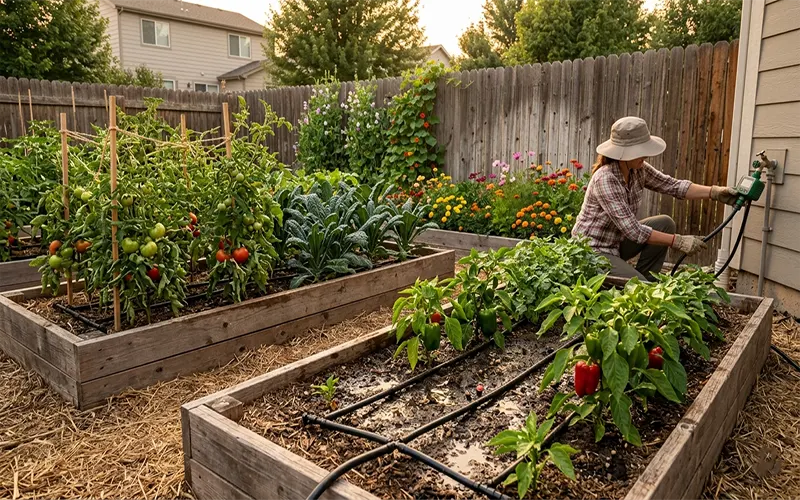
Transitioning from a garden hose to a drip system may seem daunting, but the anatomy of the system is quite logical once you break down the components.
- The Component Breakdown: Every system starts at the water source with a Backflow Preventer to keep garden water out of your drinking supply, followed by a Pressure Regulator to reduce the PSI (Pounds per Square Inch) to a level the tubing can handle. A Filter is essential for preventing clogs, leading into the Mainline and smaller Emitter lines.
- Emitter Types: Choosing the right delivery method depends on your crop. Inline Emitters are perfect for dense rows of carrots or beans, while individual Bubblers or high-output emitters are better for “heavy feeders” like large squash or pumpkins. Soaker Hoses can be an effective, low-cost alternative for established perennial beds.
- The Smart Hub: The brain of the system is the irrigation timer. While simple battery-operated units work well, WiFi-enabled “Smart” controllers can track local Evapotranspiration rates and automatically skip a cycle if the forecast calls for rain, maximizing efficiency.
Developing Your Custom Watering Schedule
There is no “one-size-fits-all” schedule in gardening; your timing must be tailored to your specific micro-climate.
- Environmental Factors: Soil type plays a massive role. Sandy soil drains rapidly and requires more frequent, shorter bursts of water, whereas clay soil holds moisture tightly and benefits from longer, slower soaks to ensure deep penetration.
- Growth Stage Adjustments: A seedling with a shallow root system needs light, frequent mists to stay hydrated. Conversely, an established tomato plant requires a deep, morning soak that reaches 6–12 inches into the soil profile.
- The “Morning Best” Rule: Aim to water at dawn. This reduces water loss to evaporation and ensures that any moisture that hits the foliage has time to dry before nightfall, significantly preventing the onset of fungal diseases.
Crops by Water Need
| Category | Examples | Watering Strategy |
| Heavy Feeders | Tomatoes, Melons, Corn | Deep, consistent soak |
| Moderate Needs | Beans, Peppers, Carrots | Regular, even moisture |
| Drought Tolerant | Rosemary, Sage, Asparagus | Allow top inch of soil to dry |
Efficiency and Conservation: The Drip Advantage
The shift to drip irrigation is one of the most impactful moves a conservation-minded gardener can make. While overhead sprinklers often lose 30–40% of their water to wind and heat, drip systems boast an efficiency rate of over 90%. By delivering water directly to the base of the plant, you utilize capillary action to spread moisture where it is needed most. This localized watering also acts as a natural form of weed suppression; by keeping the aisles and non-crop areas bone-dry, you prevent weed seeds from germinating. Furthermore, the slow, controlled release of water prevents the leaching of nutrients, ensuring that the fertilizers you apply stay within the root zone where they can be used.
Troubleshooting and Maintenance
A drip system is a powerful tool, but it is not “set it and forget it.”
- Flushing the Lines: At least once a season, open the ends of your lines to flush out any mineral deposits or algae buildup that could clog your emitters.
- The Finger Test: Technology is a great assistant, but it shouldn’t replace your intuition. Regularly perform a “finger test” by poking the soil near an emitter to ensure it is actually damp. If the soil moisture sensor says it’s wet but the plant is wilting, you may have a clog.
- Winterization: In colder climates, water left in the lines can freeze and crack the tubing. Always blow out the lines or drain the system and store your timers indoors before the first hard frost.
Pro Tip: Maximum Moisture Retention
To get the most out of your drip system, apply a 2-3 inch layer of organic mulch (like straw or wood chips) over your drip lines. This “cap” prevents surface evaporation and keeps the soil temperature stable, further reducing the stress on your plants.
The Automated Harvest
Investing in a consistent watering schedule and a robust drip system marks the transition from “watering as a chore” to “irrigation as a system.” By removing the guesswork and the physical labor of manual watering, you reclaim your time to focus on the more rewarding aspects of gardening—like pruning, harvesting, and enjoying the fruits of your labor. With a steady hand and a smart system, you are well on your way to growing the healthiest, most abundant vegetables possible.