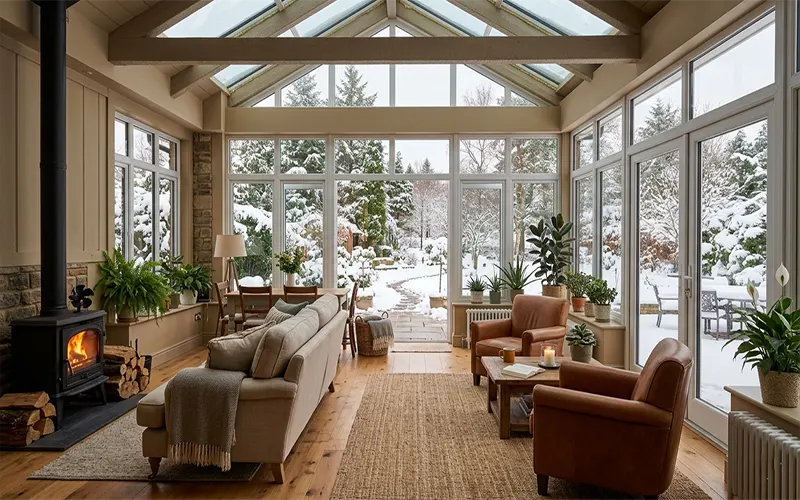
The Evolution of the Sunroom: From Seasonal to Perennial
The traditional sunroom has undergone a profound architectural evolution, transitioning from a simple screened-in porch to a sophisticated, year-round sanctuary. While a three-season room typically lacks full insulation and dedicated climate control, a true four-season sunroom is engineered as a seamless extension of the home’s primary living space. This shift mirrors a broader movement toward “hygge” and biophilic design—a philosophy that prioritizes our innate connection to the natural world. Modern homeowners increasingly seek the visual and emotional benefits of panoramic nature views without the accompanying discomfort of extreme temperatures. Consequently, the four-season sunroom has become a high-ROI home addition, offering a perennial bridge to the outdoors that functions with the same thermal comfort as a formal living room.
The Science of Comfort: Insulation and Glazing
Achieving a consistent temperature in a room dominated by glass requires rigorous technical precision in the building envelope.
- The Building Envelope: Structural integrity begins with a thermally broken foundation and insulated knee walls, which prevent the transfer of cold from the earth into the living space.
- Advanced Glazing: The glass itself acts as a high-performance barrier; triple-pane units equipped with Low-E coatings and argon gas fills are essential to block infrared light and trap heat during winter while reflecting solar gain during the summer.
- HVAC Integration: To maintain a perfect 70°F year-round, designers often recommend independent ductless mini-split systems for targeted temperature control. For an added layer of luxury, radiant floor heating can be installed beneath the tiles to provide a gentle, rising warmth that counteracts the cool touch of glass during the frostiest months.
Three-Season vs. Four-Season Comparison
| Feature | Three-Season Sunroom | Four-Season Sunroom |
| Glazing | Single or double-pane | Triple-pane Low-E / Argon |
| HVAC | None (Space heaters) | Full HVAC / Mini-split |
| Insulation | Minimal | High-density / Thermally broken |
| Usage | Spring to Autumn | 365 Days a Year |
Design Ideas for Year-Round Aesthetics
Designing for the “Infinite Summer” means creating an interior that feels intentional regardless of the weather outside.
- The Winter Conservatory: Create a cozy contrast against snowy backdrops by utilizing deep textures and velvet upholstery. A focal-point fireplace, whether gas or electric, provides both literal warmth and a visual anchor for winter evenings.
- The Summer Solarium: To manage the intensity of the July sun, incorporate high-performance skylights paired with automated shading systems. These allow you to flood the room with light while maintaining a cool, shaded environment at midday.
- Architectural Harmony: To ensure a “built-in” aesthetic, match the sunroom’s siding, roof pitch, and trim to the original home. This architectural continuity prevents the addition from looking like a “tacked-on” afterthought.
- Lighting Design: As the sun sets, the room should transition into a glowing retreat. Layer ambient lighting with dimmable sconces and task lamps to maintain functionality and a warm atmosphere after dark.
Functional Versatility: More Than Just a Lounge
The modern sunroom is a hardworking multi-purpose space that adapts to your lifestyle.
- The Productive Greenhouse Office: Natural light is a proven productivity booster. A sunroom office provides the perfect environment for deep work while simultaneously supporting a healthy, vibrant indoor plant collection.
- The Sensory Dining Room: Imagine hosting a dinner party under a starlit sky, shielded from the wind and rain. The transparency of the walls creates an immersive dining experience that standard rooms cannot replicate.
- The Wellness Studio: A four-season sunroom serves as a serene studio for yoga or meditation. Being surrounded by the shifting colors of the landscape while remaining in a climate-controlled 70°F environment fosters a deep sense of tranquility.
Material Selection for Durability
High sunlight exposure demands specific materials that can withstand UV radiation and temperature fluctuations.
- UV-Resistant Fabrics: Always select performance fabrics treated for UV resistance to prevent upholstery and rugs from fading under the constant light.
- Resilient Flooring: Choose flooring that offers high thermal stability. Porcelain tile is an excellent conductor for radiant heat, while luxury vinyl plank (LVP) provides a wood-like aesthetic that won’t warp or fade in the sun.
Pro Tip: Condensation Control
In high-performance sunrooms, proper roof ventilation is critical. Ensuring adequate airflow prevents moisture buildup and condensation, which can otherwise cloud your view and damage structural materials over time.
The Glass-Walled Sanctuary
Investing in an insulated four-season sunroom is an act of reclaiming the “lost seasons” of your backyard. It transforms the way you interact with your property, offering a constant, uninhibited view of the world outside from the comfort of a sophisticated interior. Ultimately, this space is more than just a room—it is a permanent, glass-walled sanctuary that celebrates the beauty of nature every single day of the year.