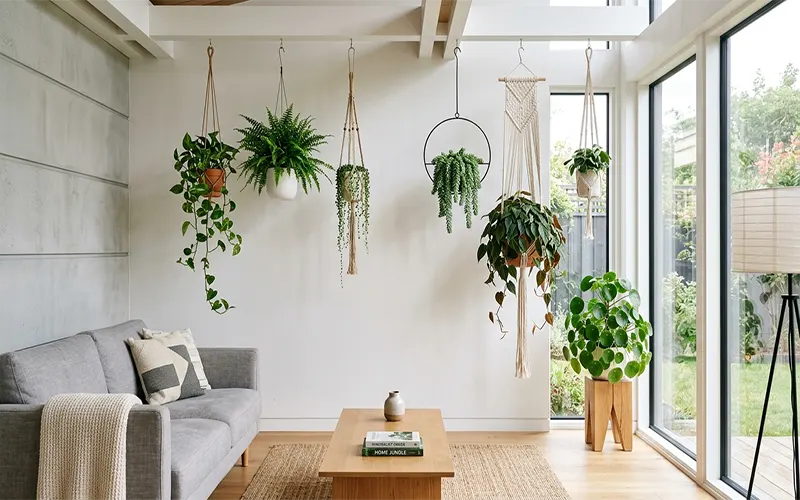
Verticality in Design: The Power of the Hanging Garden
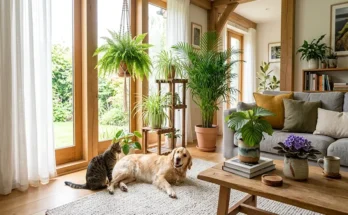
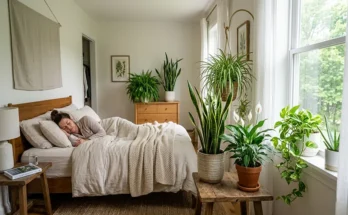
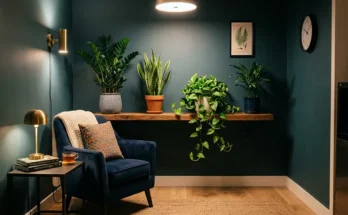
The central challenge of minimalist interior design is introducing warmth and life without compromising the integrity of open floor plans or cluttering essential surfaces. In a space defined by “less is more,” hanging plants emerge as an architectural solution—essentially acting as “living art” that draws the eye upward to emphasize the height and volume of a room. By utilizing vertical space, you can introduce organic textures while maintaining a clean, unobstructed floor plane. The ultimate aesthetic goal is the strategic use of negative space; rather than a dense jungle, the minimalist approach allows a single, well-placed plant or a curated cluster to serve as a high-impact focal point.
Curating the Minimalist Canopy: Top Plant Selections
In a minimalist setting, the choice of foliage should be based on its “sculptural life” and how its silhouette interacts with existing furniture and light.
- String of Pearls (Senecio rowleyanus): This succulent is prized for its clean, bead-like geometry. Its perfectly round, cascading strands provide a rhythmic, linear form that beautifully complements the tapered legs and low profiles of mid-century modern furniture.
- Heartleaf Philodendron: Known for its deep green, heart-shaped leaves, this plant offers a soft, trailing silhouette. It is an ideal choice for lower-light corners where its graceful vines can spill over the edges of a high shelf or planter.
- Staghorn Fern: For a centerpiece with true architectural gravity, the Staghorn Fern is unrivaled. Its unique, antler-like fronds are often mounted on cedar plaques, creating a living wall-hanging that blurs the line between botany and fine art.
- Burro’s Tail: This plant provides a thick, braided texture that adds a tactile dimension to a room. Its muted, dusty-green hue is particularly effective within a neutral minimalist palette, offering color without overstimulating the eye.
The Vessel and the Line: Hardware and Suspension
The hardware used to suspend your greenery is as important as the plant itself. To maintain a sophisticated look, every element must be intentional.
- Planter Materials: Prioritize matte finishes to avoid distracting glares. Monochrome tones—specifically black, white, or charcoal—in materials like ceramic, concrete, or powder-coated metal provide a grounded, architectural feel.
- Minimalist Hangers: Move beyond traditional, bulky macramé. Instead, opt for sleek leather straps for a touch of warmth, thin steel cables for an industrial edge, or nearly invisible monofilament lines for a “floating” effect.
- Ceiling Architecture: Consider the structural layout of your hooks. Using recessed hooks or even sleek black curtain rods can help you create a structured, linear look that organizes multiple plants into a cohesive vertical installation.
Minimalist Planter Guide
| Material | Aesthetic Style | Best For |
| Matte Ceramic | Soft Minimalist | Trailing vines like Philodendron |
| Poured Concrete | Industrial / Brutalist | Textured plants like Burro’s Tail |
| Powder-Coated Steel | Ultra-Modern / Linear | Geometric String of Pearls |
| Natural Cedar | Organic Minimalist | Mounted Staghorn Ferns |
Strategic Placement for Maximum Impact
Location is everything when using plants as architectural elements.
- Corner Anchoring: Soften the “hard” 90-degree angles of a living room by hanging a single, dramatic trailing plant in a vacant corner. This adds organic curves to the room’s rigid geometry.
- Window Framing: Use different suspension lengths to create a rhythmic, vertical frame around your natural light sources. This draws attention to the window while filtering the incoming light with greenery.
- Zoning with Greenery: In open-concept homes, a row of hanging plants can act as a “soft” room divider. This allows you to visually separate a living area from a workspace without the visual weight or bulk of a physical wall.
Maintaining the Minimalist Look: Care and Pruning
To preserve the “biophilic minimalism” of the space, maintenance must be disciplined. Pruning is not merely about plant health; it is about maintaining a clean silhouette. Regularly snip away stray or yellowing leaves to prevent a “wild” or overgrown appearance that would clash with the room’s order. For watering high-altitude plants, efficiency is key. Utilize long-neck watering cans for precise delivery or consider pulley systems that allow you to lower the plants for easy access, ensuring the floor beneath remains dry and clean.
Pro Tip: The Rule of Three
When grouping hanging plants, use odd numbers—specifically three—to maintain visual balance. Vary the heights and foliage textures, but keep the planter materials consistent to ensure the arrangement looks curated rather than cluttered.
A Breath of Fresh Air
Vertical gardening is a powerful tool for elevating the minimalist home, offering a way to integrate nature without sacrificing the precious space and clarity of a room. By treating plants as sculptural elements and being intentional with their suspension, you create an environment that feels both sophisticated and alive. In a minimalist space, the most impactful decor is undoubtedly the kind that grows.
Light and Height Placement Chart
- High Light / High Ceiling: Burro’s Tail (needs sun, loves the height)
- Bright Indirect / Mid-Level: String of Pearls (protects delicate “beads” from scorch)
- Low Light / Corner: Heartleaf Philodendron (resilient in shadows)
- Bright Indirect / Wall Mount: Staghorn Fern (mimics its natural tree-dwelling habit)