The Architecture of Flow: Defining the Modern Transition
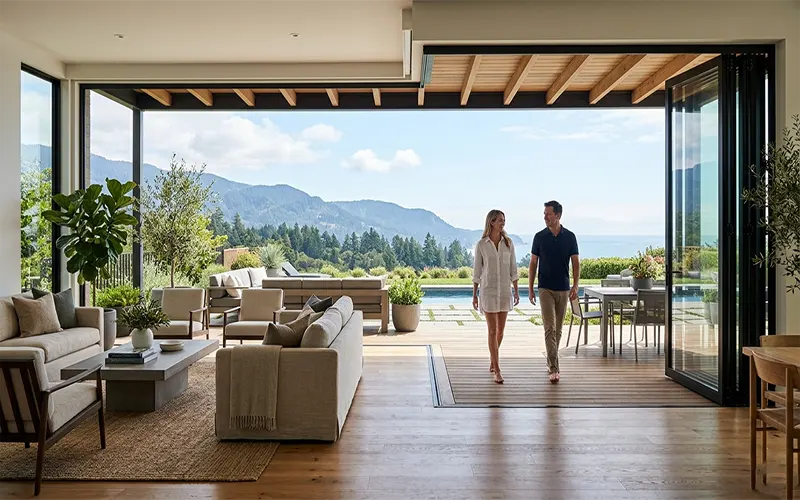
In the realm of high-end residential design, the boundaries of the home are no longer defined by static walls, but by the “biophilic” movement—the innate human desire to maintain a visceral connection to the natural world. The folding glass wall, or bi-fold system, has emerged as the ultimate architectural tool for dissolving the barrier between the interior sanctuary and the exterior landscape. When these walls retract, the sensory experience is immediate: a sudden influx of natural light washes across the room, the scent of the garden drifts inward, and the visual volume of the floor plan expands exponentially. It is more than a window; it is a transformative portal that invites the outside in.
Engineering Elegance: How Folding Glass Walls Work
Achieving a seamless transition requires a sophisticated understanding of structural engineering.
- The Mechanism: Folding systems generally fall into two categories: top-hung and floor-supported. Top-hung systems are preferred for their effortless operation, as the weight is carried by the structural header, allowing for a cleaner floor track. However, floor-supported systems are often utilized when the existing header cannot bear the substantial load of the glass panels.
- The “Accordion” Effect: Unlike sliding doors that always leave at least one panel in the sightline, bi-fold doors stack neatly to the side, providing up to a 90% clear opening.
- Thermal Performance: Luxury does not come at the cost of comfort. Modern systems utilize thermally broken aluminum frames—where a non-conductive material separates the interior and exterior metal—and Low-E (low-emissivity) glass to ensure the home remains energy-efficient, keeping heat in during the winter and out during the summer.
Top-Hung vs. Floor-Supported Systems
| Feature | Top-Hung System | Floor-Supported System |
| Weight Bearing | Structural Header | Floor Track |
| Operation | Extremely Fluid/Silent | Stable/Sturdy |
| Installation | Requires Strong Beam | Ideal for Remodels |
| Maintenance | Tracks stay cleaner | Debris can affect rollers |
Design Strategies for a True “Seamless” Look
To achieve a transition that feels truly invisible, one must focus on the details where the two environments meet.
- Flush Thresholds: The hallmark of a professional installation is the recessed floor track. By sinking the track into the floor, you eliminate tripping hazards and create a continuous plane that allows the eye to travel uninterrupted from the kitchen to the terrace.
- Material Continuity: Designers often use the same flooring material—such as large-format limestone or wood-look porcelain—for both the interior and exterior spaces. This consistency tricks the brain into perceiving the patio as an extension of the room.
- Ceiling Alignment: Extending interior ceiling beams or soffit materials past the glass line and into the exterior overhang reinforces the architectural connection.
- Color Palette Harmony: Coordinating the frame colors with the interior trim creates a “disappearing” frame aesthetic, ensuring that even when the doors are closed, the architecture stays out of the way of the view.
Functional Considerations for Large Openings
A grand opening brings grand responsibilities regarding privacy and comfort.
- Screening Solutions: Integrated, retractable insect screens are essential for enjoying the breeze without the pests; these modern screens are nearly invisible and retract into the door frame when not in use.
- Swing Doors: For daily functionality, it is vital to include an “entry door” within the folding system. This allow for quick trips outside to grab herbs or let a pet out without having to unfold the entire wall.
- Privacy and Shading: For total control, many homeowners opt for automated blinds or “smart glass” that can switch from transparent to frosted at the touch of a button, providing instant privacy when the sun sets.
Pro Tip: Managing Drainage For flush-mount tracks, a hidden drainage system is non-negotiable. Ensure your contractor installs a slotted drain or a “trench drain” on the exterior side of the sill to prevent rainwater from being driven into the house during storms.
Transforming Lifestyle and Entertainment
The installation of a folding glass wall fundamentally alters the “gravity” of a home. During social gatherings, the wide opening acts as a catalyst, allowing guests to flow naturally between the indoor bar and the outdoor fire pit without the bottleneck of a standard door. In the context of modern real estate, this high-end architectural glazing offers a significant return on investment, as “indoor-outdoor flow” remains one of the most sought-after features for luxury buyers. Even in the depths of winter, these walls act as floor-to-ceiling “moving pictures,” keeping the homeowners connected to the changing beauty of the seasons from a climate-controlled sanctuary.
Living Without Borders
Creating a seamless transition represents a shift in perspective, moving away from viewing the backyard as a separate entity and embracing it as an essential “extra room” of the house. A folding glass wall is not merely a design choice; it is a profound lifestyle upgrade that celebrates light, space, and the freedom of living without borders.